An exclusive-use safari house means you book an entire property rather than rooms within it: your own chef, guide, vehicle and schedule, with no other guests. In Kenya they typically sleep six to twelve and make financial sense from around six travellers, at which point the per-person cost often falls close to booking premium rooms individually.
What exclusive use actually includes
The term is used loosely, so it is worth being precise. A genuine sole-use booking should give you:
- The entire property. Every bedroom, whether or not you fill it. No other guests at any point in your stay.
- A dedicated staff team. Chef, housekeeping and camp manager working only for your party.
- Your own vehicle and guide, usually one per six guests, included rather than extra.
- No fixed mealtimes. Breakfast at 04:45 before a crossing watch, or lunch at 16:00 because the morning ran long, are both simply arranged.
- A flexible menu. Cooking to your family's preferences rather than a set camp menu.
The group size where it starts to make sense
The economics are unusual: because you are paying for the property, the per-person cost falls sharply as you fill it.
| Party size | How it works out |
|---|---|
| 2–4 guests | Expensive per person. Justified for a milestone occasion, rarely otherwise. |
| 6–8 guests | The sweet spot. Per-person cost frequently lands close to premium rooms booked individually — with the whole house instead. |
| 10–12 guests | Often cheaper per person than equivalent individual rooms, and far easier to coordinate. |
This is why sole-use suits multigenerational family trips and groups of friends travelling together particularly well — the format that looks like the most extravagant option on the list is frequently not, once the house is full.
Where to find them in Kenya
Sole-use properties cluster where private land makes them possible:
- Laikipia. The richest supply, because almost the entire region is private or community conservancy. Houses here often come with horses, and walking is permitted.
- The Mara conservancies. Several camps offer a separate private house alongside the main camp, or will let a party take the whole camp in low season. See the Mara conservancies guide.
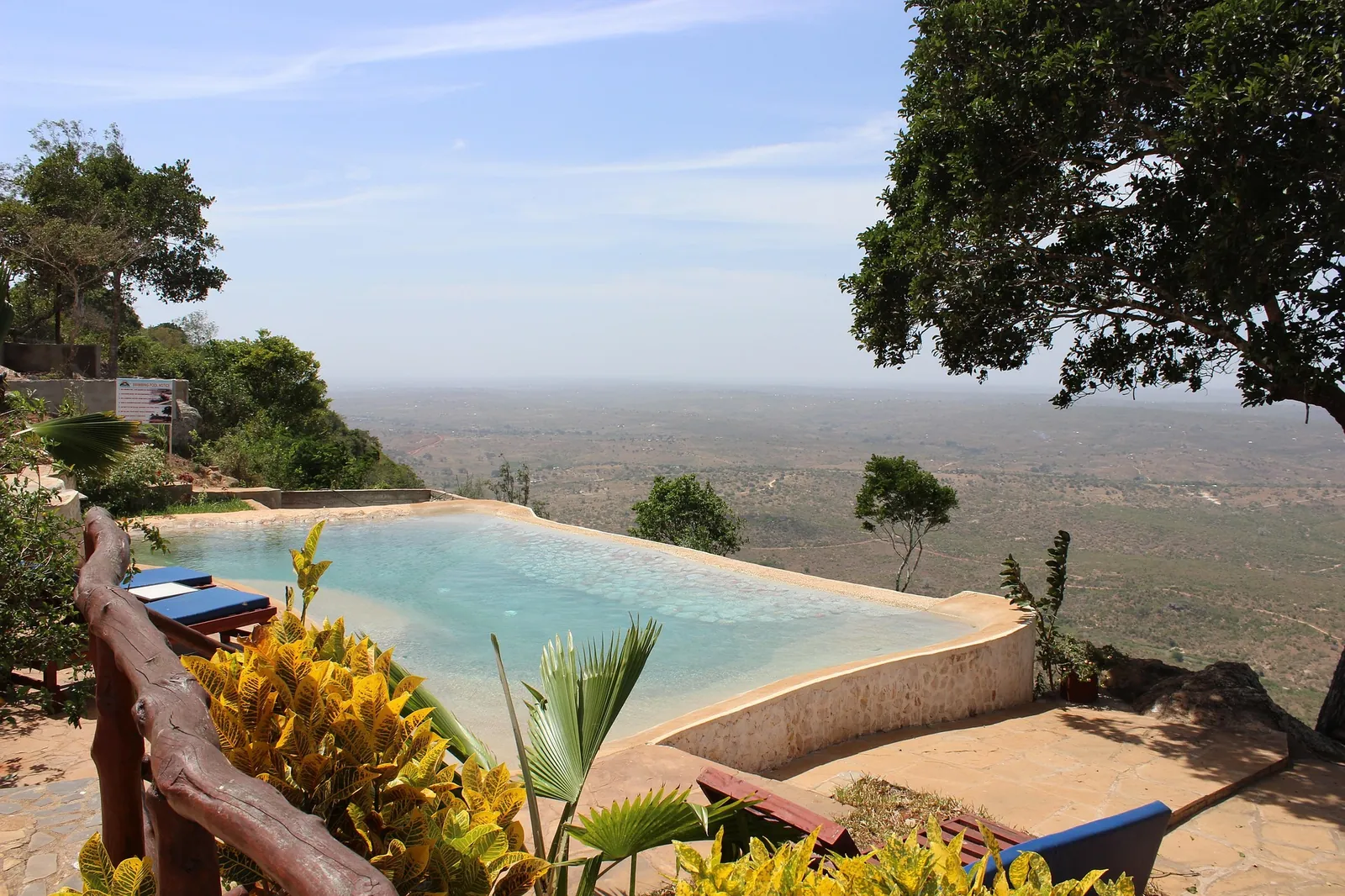
- Chyulu Hills and the Amboseli side. Group-ranch land with Kilimanjaro views and a small number of exclusive-use villas.
- The coast. Sole-use beach villas pair naturally with a bush leg — the same principle applied to the Indian Ocean.
Our private safari pillar page includes a costed exclusive-use itinerary combining these.
When booking rooms is the better decision
Sole use is not automatically the upgrade. Booking normal rooms is better when:
- You are two people. You will pay for bedrooms you never enter.
- You want other guests around. Shared dinners are a genuine pleasure of camp life for many travellers, and sole use removes them entirely.
- You would rather spend the difference on a better location. A room in an outstanding conservancy camp usually beats an entire house in a mediocre one.
- Your dates are peak season. Sole-use rates rise steeply in July–October; the same house in November is a different proposition.
Frequently Asked Questions
How many people do you need for an exclusive-use safari house in Kenya?
Most properties sleep six to twelve, and the economics generally start working from around six guests. Below four, the per-person cost is high enough that it is usually reserved for milestone occasions rather than chosen on value.
Is an exclusive-use house more expensive than booking rooms?
Not always. At full occupancy the per-person cost frequently lands close to, or below, booking equivalent premium rooms individually — while giving you the entire property, staff and schedule. It is expensive only when the house is under-filled.
Do exclusive-use houses include a vehicle and guide?
Often but not always, and it is the single most important thing to confirm in writing. Some rates include one vehicle and guide per six guests; others quote them separately, which changes the total materially.
Can we bring our own chef or nanny?
Most sole-use properties accommodate this, and many have dedicated staff quarters. Some will also arrange a qualified local nanny familiar with camp safety, which families with young children often find more useful than bringing someone unfamiliar with the environment.
Are exclusive-use houses suitable for young children?
They are frequently the best option for families with very young children, because there are no other guests whose experience can be disrupted, mealtimes are entirely flexible, and the property can be briefed on your children's routines in advance.